
A Deposit Is Part Of The Purchase, With Its Own Deadline
A real estate deposit is money provided under the purchase contract before completion. It signals commitment and gives the transaction a defined sum held under agreed terms. When the sale completes, it is credited toward the price. It is not an additional purchase fee.
There is no universal BC deposit amount, and a deposit is not required to create a binding purchase contract. Once an accepted contract requires one, however, its payment obligation matters. A buyer should not assume that withholding the deposit cancels the deal or limits every potential consequence to that amount.
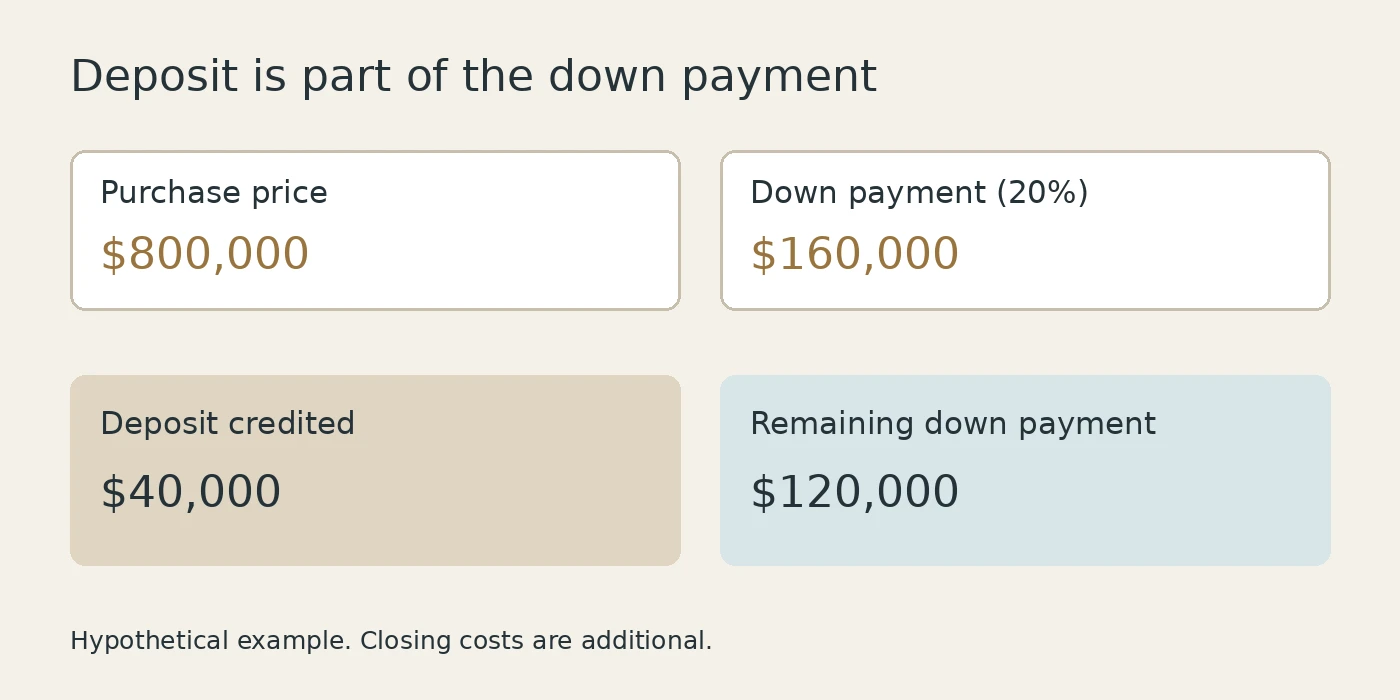
Deposit Versus Down Payment: A Hypothetical Example
- Purchase price
- $800,000
- Chosen total down payment
- $160,000
- Deposit already paid
- $40,000
- Down payment still to fund
- $120,000
The $40,000 is included in the $160,000, not added to it. The chosen amounts are illustrations, not minimums or recommended deposit percentages. Taxes, professional fees and adjustments still need a separate budget.
Read the BC closing-cost guide to connect this calculation to the final statement. Keeping these numbers separate makes it easier to see both the early cash requirement and what remains due near completion.
Read The Clause Before Thinking About A Percentage
Two offers with the same deposit can have very different obligations. One might require funds on acceptance; another might set a deadline after subject removal. A presale can require several instalments. The wording determines the amount, due date, recipient and relevant release arrangements.
Amount And Schedule
Is there one payment or more? Is the deadline a fixed date, a number of days after acceptance or another event? Does the clause specify a time?
Recipient And Method
Who must receive the money? What payment methods are accepted? What evidence confirms receipt and the property to which it is allocated?
Holding And Release
Where is it held, under what terms, and what authorizes its transfer for completion? Have unfamiliar holding arrangements reviewed.
Changing The Arrangement
If timing or amount needs changing, address that before the deadline through a documented agreement. Do not rely on an informal assurance.
Why Amounts Vary
The proposed deposit reflects negotiation, price, competition, the buyer's access to funds, the payment schedule and the seller's assessment of the offer. A larger deposit can tie up more money before completion. A smaller one does not remove the contract obligations. Evaluate it alongside subjects, dates and financing rather than treating it as a score that proves the whole offer is strong.
For example, a buyer offering a substantial sum from an investment account may have less reliable access by tomorrow's deadline than a buyer with a smaller sum already cleared. The relevant question is whether the promised funds can actually arrive on time.
A Dated Example: From Offer To Possession
Hypothetical resale only: assume the parties agree to a $40,000 deposit due October 15, 2026, after a subject deadline on October 14. Completion is November 19 and possession is November 20. These dates illustrate a contract arrangement; your deposit may be due before subject removal, and completion and possession may differ.
- October 5: offerThe buyer proposes the price, subjects, dates and deposit terms.
- October 6: acceptanceThe parties reach an accepted agreement. Read all deadlines immediately.
- October 7–14: subject periodThe buyer works on the stated financing, inspection and document conditions.
- October 14: subject decisionIf proceeding and the applicable conditions are satisfied, the required written subject-removal process is completed.
- October 15: deposit dueThe buyer delivers the required $40,000 using the agreed arrangements.
- November 19: completionThe deposit is accounted for in the purchase funds and title transfer.
- November 20: possessionAccess is provided according to the contract; the deposit was not the key-release trigger.
Map the actual contract dates into your calendar with reminders early enough to solve a problem. A payment deadline is not necessarily satisfied by initiating a transfer at the last minute. Confirm what receipt is required and leave time for bank limits, clearing and verification.
For Vancouver condo purchases, subject work often involves more than reading one Form B. The strata-document guide explains the records to connect before making the subject decision.
Who Holds The Deposit?
In a typical resale, the deposit is held in a real estate brokerage trust account. The brokerage is a stakeholder: it holds the money neutrally, even if it represents one party. The funds are not simply handed to the seller to spend because an offer was accepted.
Ask for a receipt and retain it with the contract. If another holder is proposed, get independent legal advice about the arrangement and release terms. Do not send money to a personal account because an email describes it as “trust.”
What Happens On Completion?
The deposit is credited in the transaction's accounting. The contract and lawful directions govern the transfer of trust funds for completion; a standard contract can authorize payment to a lawyer or notary. The brokerage and conveyancer coordinate the process. The buyer should reconcile the deposit credit against the final funds request rather than paying it again.
Keep the deposit receipt, all instalment records and any amended amounts together. If there are multiple buyers contributing, ensure the total shown in the records matches the agreed deposit, and tell the conveyancer how funds were provided if asked.
Interest Is Not Automatic Savings Income
BCFSA explains that, unless the contract specifies interest payable to the buyer or seller, deposit interest is payable to the Real Estate Foundation of BC. Do not count assumed interest toward your closing budget. Check the actual holding terms if that detail matters to you.
Subjects And Rescission Are Different Processes
A subject condition creates a contract-specific process and deadline. Financing approval, an inspection or strata review may be among the conditions, but their wording matters. Subject removal is a consequential decision, not simply a calendar milestone. Work through the requirements and written notice process with your representative, and obtain legal advice for uncertainty or a dispute.
The Home Buyer Rescission Period
For covered BC residential purchases, the statutory period is three business days after acceptance, starting the next full business day. It runs alongside subjects, rather than starting after their removal. Exemptions apply. A buyer exercising this right owes 0.25% of the purchase price.
For illustration, 0.25% of an $800,000 price is $2,000. If a brokerage is holding a $40,000 deposit and the right is properly exercised, the statutory process pays that fee to the seller and returns the remainder. Not having paid a deposit does not eliminate the fee. Confirm coverage, deadline and service requirements promptly; this is different from relying on a subject condition.
If The Buyer Cannot Deliver A Required Deposit
Alert the representative and obtain legal advice immediately. An unpaid deposit can put the buyer in breach; the result depends on the contract and facts. Do not assume the seller will extend the deadline, that the contract disappears, or that a later transfer fixes the issue. Any proposed change needs the proper documented agreement.
If the sale later fails, entitlement to the deposit and possible further claims require legal review. This guide does not say that a buyer always loses it, that a seller always keeps it, or that either party's total exposure is limited to it.
Make The Payment Plan Before You Make The Promise
- Identify the source. Check whether money is already cleared or must move from an investment, overseas account or another institution.
- Confirm availability. Ask about withdrawal notices, settlement, transfer limits, bank hours and holds.
- Confirm the exact recipient. Verify the payee and instructions through an established contact number, especially after an unexpected email change.
- Use the agreed method. Ask what the holder accepts and how receipt will be acknowledged. A screenshot of a transfer instruction is not the same as confirmed receipt.
- Keep the records. Save the receipt and payment confirmation with the contract and any amendments.
- Preserve the rest of the budget. Keep remaining down-payment and closing-cost funds available after the deposit leaves your account.
Presales Need Their Own Deposit Review
A development purchase may involve staged deposits over months or years and REDMA-specific trust or authorized deposit-insurance arrangements. Do not apply a resale stakeholder explanation to every presale contract. Review who holds the funds, when they may be released, protection arrangements and the completion obligations. See the presale versus resale comparison for the wider risk and financing questions.
Common Deposit Questions
Is a 5% deposit mandatory in BC?
No universal percentage applies. The parties negotiate the amount and schedule, and the accepted contract controls the payment obligation.
Is the deposit added to my down payment?
It is normally included within the down payment and credited toward the price at completion. Do not count it twice.
Can the brokerage decide who gets a disputed deposit?
No. A brokerage holding funds as stakeholder does not adjudicate the parties' dispute. Release requirements and any legal process need separate review.
Is the deposit always due after subject removal?
No. It may be due on acceptance, after subject removal or on another agreed schedule. Read the actual clause.
Sources And Further Reading
Reviewed October 3, 2026. The dated sequence and amounts are hypothetical.
- BCFSA: Consumer Guide to Deposits, negotiated timing and payment arrangements.
- BCFSA: buying-home deposits, stakeholder holding, release and interest.
- BCFSA: Home Buyer Rescission Period, coverage, timing and fee.
- BCFSA: Trust Accounts Guidelines, funds and conveyancers.
- BCFSA: REDMA FAQs, development deposits and protection.
Preparing An Offer?
If you would like help organizing the offer dates and deposit questions before committing, contact Spencer. A disputed payment or unfamiliar contract should also be reviewed by a lawyer.