
Start With Water, Not Seasonal Decoration
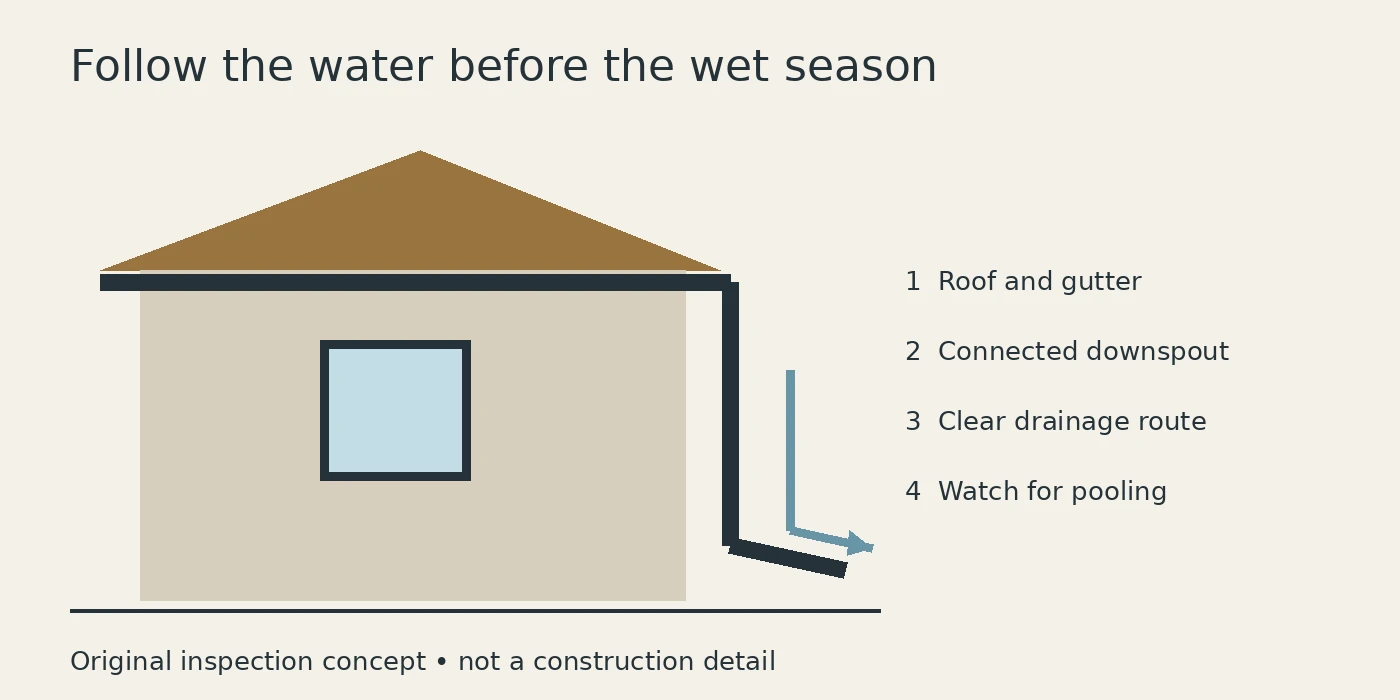
In a Vancouver fall, the useful question is where rain goes after it reaches your property. A roof can shed water correctly while a blocked outlet sends it onto a wall. A clean balcony can still have a drain hidden behind a planter. Follow the route from roof to outlet to drainage system, then look for interruptions.
Make an initial inspection before sustained rain, revisit drainage after leaves fall, and observe from a safe position during a wet day. The right frequency depends on trees, roof geometry and the building's maintenance plan. A calendar reminder alone cannot confirm that water is moving properly.
Follow The Water: Four Things To Look For
Original inspection concepts. Actual assemblies differ; these drawings do not specify repair methods, slopes or dimensions.
After A Rain, Compare What You Observed
Record the location, date and conditions: “water remained beside the patio outlet after rain stopped” is more useful than “drainage bad.” Take an overview and a close photograph from a safe position. If the same spot ponds again after accessible debris is removed, request an assessment rather than repeatedly treating it as a leaf problem.
Street drainage also matters. Vancouver asks residents not to rake or blow leaves into streets or catch basins. Its catch-basin programme explains safe surface clearing and reporting. A missing grate, persistent flooding or an inaccessible blockage belongs with the City, not a homeowner repair.
Detached Homes: Inspect The Whole Rainwater Route
Roof, Gutters And Downspouts
From the ground, look for visible loose roof material, debris accumulation, damaged gutters, separated downspout connections and water marks. Arrange professional inspection where the roof or outlets cannot be evaluated safely. A dry-day photograph is useful, but a contractor may need to investigate what happens during rain.
Confirm where each downspout goes. A connection to a drainage system, an approved surface discharge and a rainwater system have different maintenance needs. Look for disconnected pieces and pooling at the building; do not redirect water onto a neighbour's property or modify a buried connection without checking the design and applicable requirements.
Ground Drainage, Vegetation And Exterior Surfaces
Keep accessible patio and driveway drain surfaces clear. Note new low spots, overflow, water against the building and soil or mulch burying previously visible details. Trim vegetation where it obstructs inspection or drainage, using an arborist for significant tree work. Do not excavate beside foundations to diagnose a problem yourself.
Check accessible window and door areas for changed staining, damaged seals and evidence of leakage. Exterior sealant work should suit the actual joint and materials. A blanket layer of caulk can conceal the source or block drainage. The rainscreen guide explains why drainage openings are part of an assembly rather than simply gaps to fill.
Hoses And Exterior Faucets
Disconnect garden hoses before freezing conditions. Identify the faucet type and follow its winterization instructions; do not assume a frost-resistant label eliminates every maintenance step. Where a system has an indoor shutoff and drain procedure, confirm how it works with the supplier or plumber. Deal with a leaking hose bib rather than waiting for the temperature to drop.
Condo Owners: Observe, Maintain Accessible Areas And Report
Your balcony, windows and exterior walls may involve common property or limited common property. Responsibility depends on the strata plan, legislation, bylaws and any applicable arrangements. A balcony being accessible only from your suite does not make all repairs your responsibility.
- Keep accessible balcony drain surfaces visible and free of loose debris, where permitted.
- Move items that obstruct an outlet; avoid changes to membranes, flashing or fixed drainage.
- Report new leaks, ponding, exterior staining or damaged joints promptly, with dated photographs.
- Check window operation and accessible weather seals; ask management before exterior repairs.
- Know the building's after-hours leak contact and your suite's water shutoff location.
Ask when common roof drains, gutters and balcony drainage were last inspected and who receives urgent reports. BC Housing's balcony guidance distinguishes routine care from specialist work. Do not lift decking or pry at a waterproofing detail to see what is underneath.
Townhouse Owners: Clarify The Boundary Of Responsibility
A townhouse may feel like a detached house while its roof, exterior, landscaping or underground drainage are maintained collectively. Start with the strata documents and maintenance arrangements. Do not assume that your front door, yard or hose bib establishes responsibility for everything nearby.
Check Your Accessible Areas
Look at entry drainage, patio outlets, door seals, exterior lighting and any hose connection you use. Keep approved surface areas tidy and report defects with their exact location.
Confirm The Shared Schedule
Ask about roof and gutter servicing, drainage inspection, vegetation management and exterior repairs. Clarify who arranges work and how urgent water problems are escalated.
Check the strata documents and building maintenance plan together. A forecast capital replacement in a depreciation report does not replace this season's routine drain cleaning or investigation of a new leak.
Heating, Alarms And The Indoor Checks
Identify your heating equipment before applying a generic filter checklist. A ducted furnace, ductless heat pump, fan-coil system and electric baseboard heater do not have identical maintenance tasks. Follow the equipment instructions for filter type, cleaning or replacement and service intervals. Keep permitted intake and outlet areas clear; arrange qualified servicing for uncertain performance, leaks or unusual operation.
Test smoke alarms monthly as Health Canada recommends, and check the maker's replacement and battery instructions. Carbon monoxide alarms detect a different hazard; follow Canadian guidance and the device instructions for placement, testing and replacement where applicable. Do not disable an alarm because it is inconvenient.
Check exterior and entry lights after dark from a safe location. Report failed common-area fixtures or damaged fittings. Have electrical defects repaired appropriately. Review emergency contacts, insurance information and the route to water shutoffs before an incident, not while a leak is underway.
Vancouver Fall Maintenance Checklist
Property
Inspection date
Mark each item checked, action needed or not applicable. Add the responsible person and follow-up date beside any action.
- Roof and high gutters assessed safely; contractor booked where needed.
- Gutter outlets and downspout connections checked for blockage or leakage.
- Drainage route identified; recurring pooling recorded and referred.
- Accessible patio and balcony outlets visible and clear of loose debris.
- Window joints, exterior seals and new staining observed.
- Door operation and weather stripping checked.
- Hoses disconnected and faucet-specific winterization confirmed.
- Heating equipment maintained using its actual instructions.
- Smoke alarms tested; CO alarm needs and instructions reviewed.
- Entry and exterior lighting checked after dark.
- Vegetation obstructing drainage or inspection addressed appropriately.
- Strata responsibility and shared maintenance schedule confirmed, if applicable.
- Emergency contacts, water shutoffs and follow-up actions recorded.
Outstanding action / responsible person / due date:
Recheck after leaf fall or the next significant rain:
References For Your Maintenance Plan
- BC Housing: homeowner maintenance and Maintenance Matters guides
- BC Housing: decks and balconies
- BC Housing: maintaining your roof
- City of Vancouver: catch-basin care
- Health Canada: fire safety and smoke alarms
- Health Canada: preventing carbon monoxide exposure
Planning Your Next Home?
If you want to discuss how a property's maintenance responsibilities fit your plans, contact Spencer.